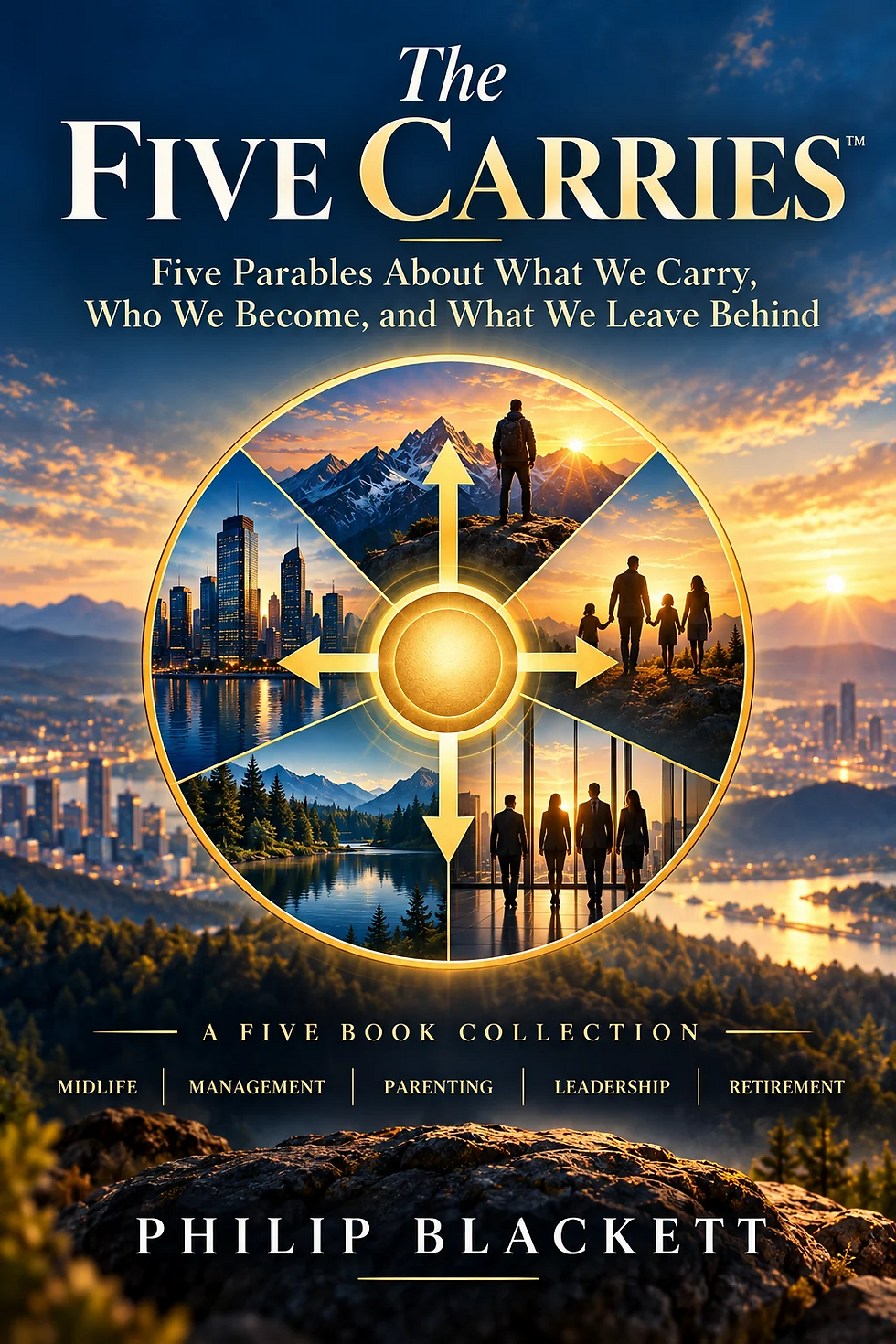
Finding Purpose in Retirement: What Will You Carry Into the Next Chapter of Life?
By Philip Blackett | Founder of Life After 40® and Author of The Five Carries™

You've spent decades preparing financially for retirement. But have you prepared personally for the life you'll live when work is no longer at the center of it?
It's a question I believe more people should ask before their final day on the job.
For much of our adult lives, work provides structure.
We know when to wake up.
Where to go.
What responsibilities require our attention.
Who depends on us.
And how our professional contributions fit into a larger purpose.
Then, one day, retirement arrives.
The meetings stop.
The work schedule changes.
The professional title may no longer accompany our name.
And the responsibilities that once defined our days may begin to disappear.
For some people, that transition feels liberating.
For others, it can create an unexpected sense of uncertainty.
Because retirement isn't simply a change in employment status.
It's a transition in identity, responsibility, relationships, and purpose.
That's why I wrote The Five Carries of Retirement: A Parable About Purpose, Legacy, and Life After Work.
I wanted to explore a dimension of retirement that doesn't always receive the same attention as financial planning.
Not simply whether we have enough money to retire.
But whether we've considered what we're retiring into.
Retirement Planning Is About More Than Money
When people discuss preparing for retirement, the conversation frequently centers on finances.
Retirement accounts.
Investment returns.
Social Security.
Pensions.
Health insurance.
Housing expenses.
And how much income they'll need.
These are essential considerations.
But financial preparedness alone doesn't answer every question retirement introduces.
What will give your days meaning?
How will you maintain important relationships?
What will you do with your time?
How will you continue contributing to others?
What interests will you pursue?
And how will you define yourself without relying on the professional role you've held for years?
For some, retirement offers the freedom to explore long-postponed dreams.
For others, it may involve new caregiving responsibilities, financial limitations, health considerations, or the need to continue working in some capacity.
There is no single retirement experience.
But nearly everyone navigating this transition faces a version of the same challenge:
What responsibilities am I ready to release, and what meaningful responsibilities do I want to carry next?
The Retirement Identity Challenge: Who Are You Without Your Job Title?
Imagine meeting someone at a networking event.
After exchanging names, one of the first questions often asked is:
"What do you do?"
For decades, many of us learn to answer that question with a professional title.
"I'm a teacher."
"I'm an executive."
"I'm a business owner."
"I'm an engineer."
"I'm a manager."
Our work becomes an important part of how we introduce ourselves.
And over time, it may become an important part of how we understand ourselves.
But what happens when that role ends?
What happens when you're no longer managing employees, running a business, or reporting to an office each morning?
Some people navigate that transition comfortably.
Others discover that their professional identity occupied more space than they realized.
I believe this is where retirement can become an extraordinary opportunity.
Because losing a job title doesn't mean losing your value.
And stepping away from professional responsibilities doesn't mean stepping away from a meaningful life.
You are more than the work you performed. And your ability to contribute doesn't automatically expire when your career ends.
Retirement may provide an opportunity to rediscover parts of yourself that received less attention during your working years.
What Are The Five Carries™ of Retirement?
The Five Carries™ is a framework I created to help people understand responsibilities in five interconnected directions.
In retirement, these directions provide a way to examine what we're leaving behind, what relationships we want to strengthen, how we'll continue contributing, and how we'll care for ourselves.
The same five directions apply throughout life.
But the context changes...
1. Carry Up: Honor Your Past Without Remaining Trapped by It
By retirement, you've accumulated decades of experiences.
Successes.
Failures.
Relationships.
Lessons.
Sacrifices.
And decisions that shaped your identity.
Carry Up invites you to honor those experiences and the people who influenced your journey.
Perhaps you're reflecting on mentors who helped you advance.
Parents who made sacrifices for your opportunities.
Or professional values that guided your career.
But there's an important distinction.
You can respect the person you were without requiring your future to look exactly like your past.
Retirement may involve releasing assumptions about what makes you valuable.
Your professional authority may change.
Your daily responsibilities may change.
But the wisdom and character you've developed can remain meaningful.
Carry Up encourages gratitude without unnecessary attachment.
2. Carry Down: Reconsider How You Support Those Who Depend on You
Retirement doesn't necessarily mean people stop depending on you.
You may continue supporting adult children.
Helping grandchildren.
Caring for a spouse.
Mentoring younger professionals.
Or contributing to your community.
But retirement can also be an opportunity to reconsider how those responsibilities are distributed.
For example, some retirees find themselves becoming the default caregiver, problem-solver, or financial resource for extended family members.
Helping family can be deeply meaningful.
But maintaining appropriate boundaries is also important.
Carry Down asks:
Am I supporting others in ways that strengthen them, or am I taking on responsibilities that prevent both of us from growing?
It's possible to be generous without becoming responsible for everything.
And it's possible to remain involved in the lives of younger generations while respecting their independence.
3. Carry Across: Invest in Relationships Beyond Your Career
Work provides more than income.
For many people, it also provides social interaction, community, and a sense of belonging.
Colleagues become friends.
Meetings create regular contact.
Shared projects strengthen relationships.
When work ends, some of those interactions naturally diminish.
That's why Carry Across becomes especially important during retirement.
It involves maintaining and developing meaningful relationships with spouses, friends, peers, neighbors, and communities.
Retirement can create more time for relationships.
But meaningful connections still require intentional effort.
You may want to reconnect with old friends.
Join a community organization.
Spend more time with your spouse.
Develop friendships around shared interests.
Or participate in activities that introduce you to people beyond your previous professional circle.
A fulfilling retirement isn't simply about having more time. It's also about having people and purposes worth sharing that time with.
4. Carry Forward: Turn Experience Into Legacy
One of the most powerful opportunities of retirement is the ability to pass forward what you've learned.
Think about the experiences you've accumulated.
The mistakes you made.
The challenges you overcame.
The lessons you learned about people.
The wisdom you wish someone had shared with you earlier.
Those experiences can become valuable to others.
Carry Forward encourages retirees to consider how their knowledge, relationships, resources, and experiences might benefit future generations.
This could involve mentoring younger professionals.
Teaching a skill.
Volunteering.
Writing family stories.
Supporting community initiatives.
Helping grandchildren understand family history.
Or contributing to causes you believe in.
Legacy doesn't have to involve wealth or public recognition.
Sometimes, the greatest legacy is another person who becomes stronger because you took the time to invest in them.
Retirement can mark the end of a career without marking the end of your contribution.
5. Carry Within: Continue Developing the Person You're Becoming
Retirement can create an opportunity to invest more intentionally in your own health and well-being.
But retirement alone doesn't guarantee fulfillment or good health.
Carry Within focuses on your physical, emotional, relational, intellectual, and personal development.
Through Life After 40, we emphasize Nutrition, Exercise, Mindset, and Recovery as important foundations for sustainable well-being.
Those pillars don't become less relevant when someone retires.
They may become more intentional priorities.
Carry Within might involve establishing regular movement habits, nurturing relationships, maintaining curiosity, learning new skills, or developing a daily rhythm that supports your well-being.
But perhaps the most important aspect is identity.
Who are you becoming when professional advancement is no longer the primary measure of your progress?
That's a question worth exploring.
Meet Auntie Aaliyah: From Receiving Wisdom to Passing It Forward
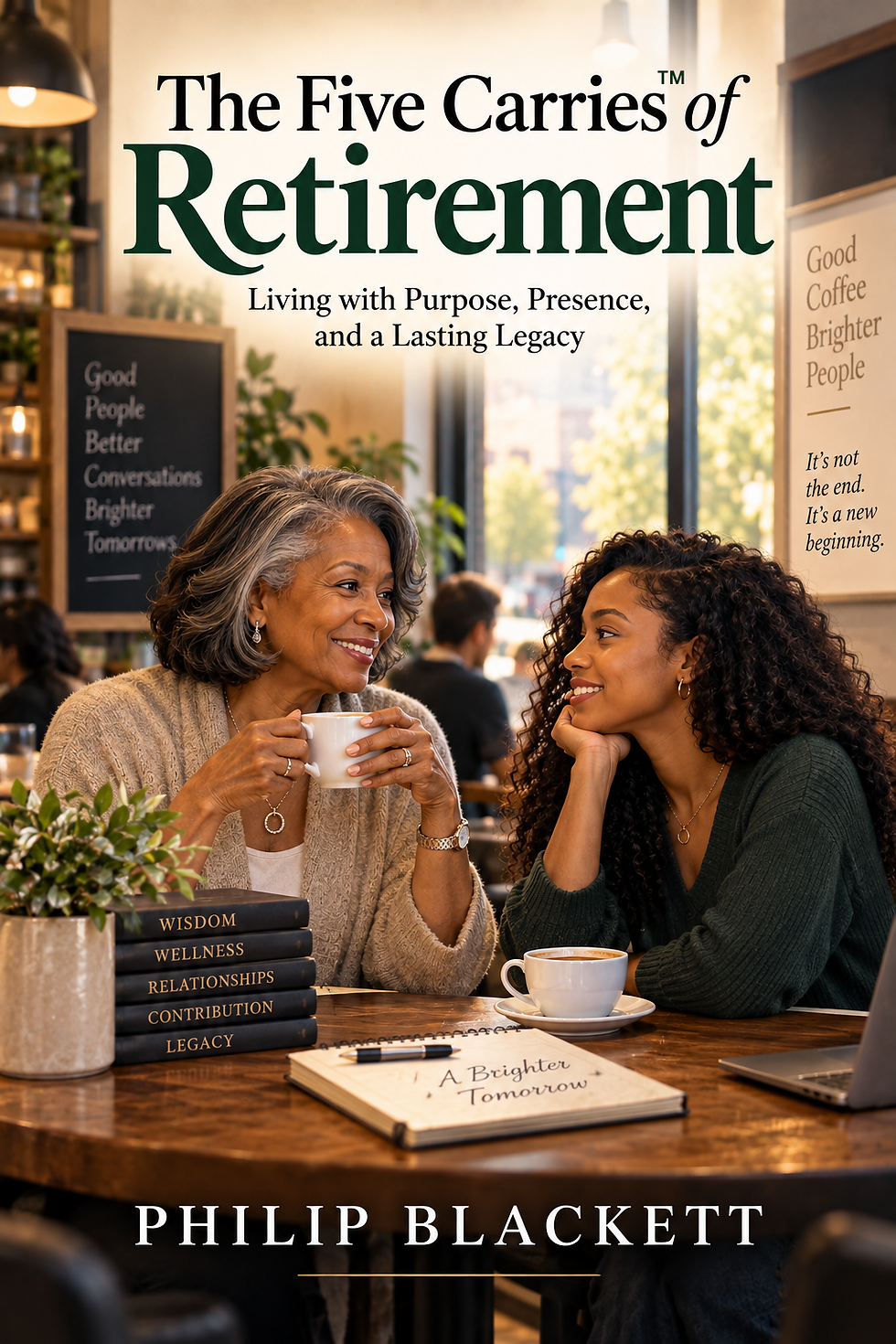
One of my favorite aspects of The Five Carries book series is how the relationships between its characters develop over time.
In The Five Carries of Midlife, readers meet Aaliyah Grace as she begins questioning the responsibilities shaping her life.
Her mentor, Uncle Phil, helps her explore the five directions of responsibility.
Across the series, Aaliyah grows through experiences involving management, parenting, and leadership.
Then, in The Five Carries of Retirement, the story enters a new season.
Aaliyah is now navigating retirement and the questions that come with life after work.
The story also introduces Maya, a younger woman who has her own responsibilities and uncertainties.
And something meaningful happens.
Aaliyah, once the person receiving wisdom, becomes "Auntie Aaliyah" — the person capable of passing wisdom forward.
That transformation is central to what I wanted this book to communicate.
Retirement doesn't mean your story has finished. Sometimes, it means you've reached the chapter where your experience can become someone else's guidance.
Not because you have every answer.
But because you've learned lessons worth sharing.
And because the people coming after you may benefit from your perspective.
What Are You Retiring From — and What Are You Retiring Into?
I encourage people preparing for retirement to make two lists.
The first list is titled:
What I'm Retiring From
Consider the responsibilities and experiences you're ready to leave behind.
Perhaps it's commuting.
A demanding professional schedule.
Certain workplace pressures.
The expectation to be constantly available.
Or the responsibility of managing a large team.
Now create a second list:
What I'm Retiring Into
This list may require more thought.
Perhaps you're retiring into greater family involvement.
More time for health and wellness.
Travel.
Mentorship.
Community service.
Creative pursuits.
Spiritual growth.
Lifelong learning.
Or a new form of work that feels meaningful without requiring the same level of professional responsibility.
The point isn't to fill every available hour.
A slower pace can be a meaningful choice.
But I believe it helps to identify what you want the next chapter to contain.
Because an empty calendar and a meaningful life aren't necessarily the same thing.
The Retirement Table: An Exercise for Your Next Chapter
Imagine sitting at a table with five empty chairs, each representing one of The Five Carries.
At each chair, consider the responsibilities you want to bring into retirement.
Carry Up: What parts of my past do I want to honor, and what expectations am I ready to release?
Carry Down: Who will continue depending on me, and how can I support them appropriately?
Carry Across: Which relationships do I want to strengthen, restore, or develop?
Carry Forward: What knowledge, values, resources, or opportunities do I want to pass to others?
Carry Within: How will I care for my health, mindset, relationships, curiosity, and personal development?
Now consider three additional questions.
What am I carrying today?
What do I want to carry in my next chapter?
What am I finally ready to stop carrying?
These questions aren't limited to retirees.
But retirement creates a particularly meaningful opportunity to answer them.
Five Ways to Create More Purpose in Retirement
1. Establish a Meaningful Daily Rhythm
Consider the activities, relationships, and practices that make your days feel worthwhile.
This doesn't require recreating a rigid work schedule.
It means having a sense of intention.
2. Continue Learning
Explore a subject you've always found interesting.
Develop a new skill.
Take a class.
Read more.
Learn a language.
Or pursue a creative interest.
Curiosity can remain an important part of personal development throughout life.
3. Strengthen Social Connections
Be intentional about maintaining friendships and developing new relationships.
Consider community groups, shared interests, volunteering, or regular time with people who matter to you.
4. Share Your Experience
Think about what you've learned that may be useful to others.
Mentorship doesn't require a formal title.
Sometimes, it begins with a conversation.
5. Define Your Next Chapter in Your Own Words
Avoid assuming your retirement must resemble someone else's.
Some people want adventure.
Others want simplicity.
Some continue working.
Others prioritize family, creativity, or service.
The goal isn't to follow someone else's retirement blueprint.
It's to create a meaningful next chapter that reflects your circumstances, values, and priorities.
Frequently Asked Questions About Finding Purpose in Retirement
Why do some people feel lost after retirement?
Work can provide identity, routine, relationships, and a sense of contribution. When those structures change, some retirees experience uncertainty about how to spend their time or define their purpose. Building meaningful activities and relationships can help support the transition.
How do I find purpose in retirement?
Begin by examining your interests, relationships, strengths, values, and the ways you want to contribute. Purpose may emerge through family, community involvement, learning, creativity, mentorship, paid work, or personal growth.
What is the difference between retirement planning and retirement purpose?
Traditional retirement planning often focuses on financial readiness and practical needs. Retirement purpose considers how individuals want to live, connect, contribute, grow, and experience meaning after full-time work changes or ends. Both are important.
Can The Five Carries™ help someone who has already retired?
Yes. The framework can help retirees reassess responsibilities, relationships, health, boundaries, future contributions, and personal identity at any point during retirement.
Retirement isn't The End of Your Story
When we reach the end of a professional career, it can be tempting to measure our lives by what we've accomplished.
The positions we held.
The income we earned.
The people we managed.
The companies we helped build.
Those accomplishments deserve recognition.
But I believe retirement presents another opportunity.
The opportunity to consider what kind of person we want to become when achievement is no longer organized around a career.
What relationships deserve more attention?
What wisdom can we share?
What responsibilities no longer belong to us?
What experiences have we postponed?
And what meaningful contributions are still ahead?
I believe the second half of life — and every chapter within it — can become a season of remarkable purpose.
But purpose may require us to redefine what success means.
Not simply by what we've accumulated.
Or what we've accomplished.
Or what titles we've held.
But by what we continue to value, contribute, and carry forward.
Retirement isn't simply about what you're finally able to stop doing. It's also about what you're finally free to start doing.
So whether you're five years away from retirement, five months away, or already enjoying life after work, I encourage you to consider one question:
What are you going to carry into your next chapter?
Your answer might reveal a future that's far more meaningful than you imagined.
Discover The Five Carries™ of Retirement
A Parable About Purpose, Legacy, and Life After Work
If you're preparing for retirement, already retired, or supporting someone navigating life after work, this book offers an opportunity to rethink responsibility, identity, purpose, and legacy.
Explore the individual Kindle and paperback editions, or discover the complete Five Carries book collection in hardcover.
Learn more about the series, The Five Carries™ framework, coaching, and other resources at FiveCarries.com.
To understand how this framework applies across every stage of life, read The Five Carries™: What Are You Carrying — and Is It What Matters Most?.
Philip Blackett is the founder of Life After 40®, creator of The Five Carries™, and an executive coach, author, consultant, and speaker focused on helping people thrive in the second half of life through sustainable high performance and human capacity development.